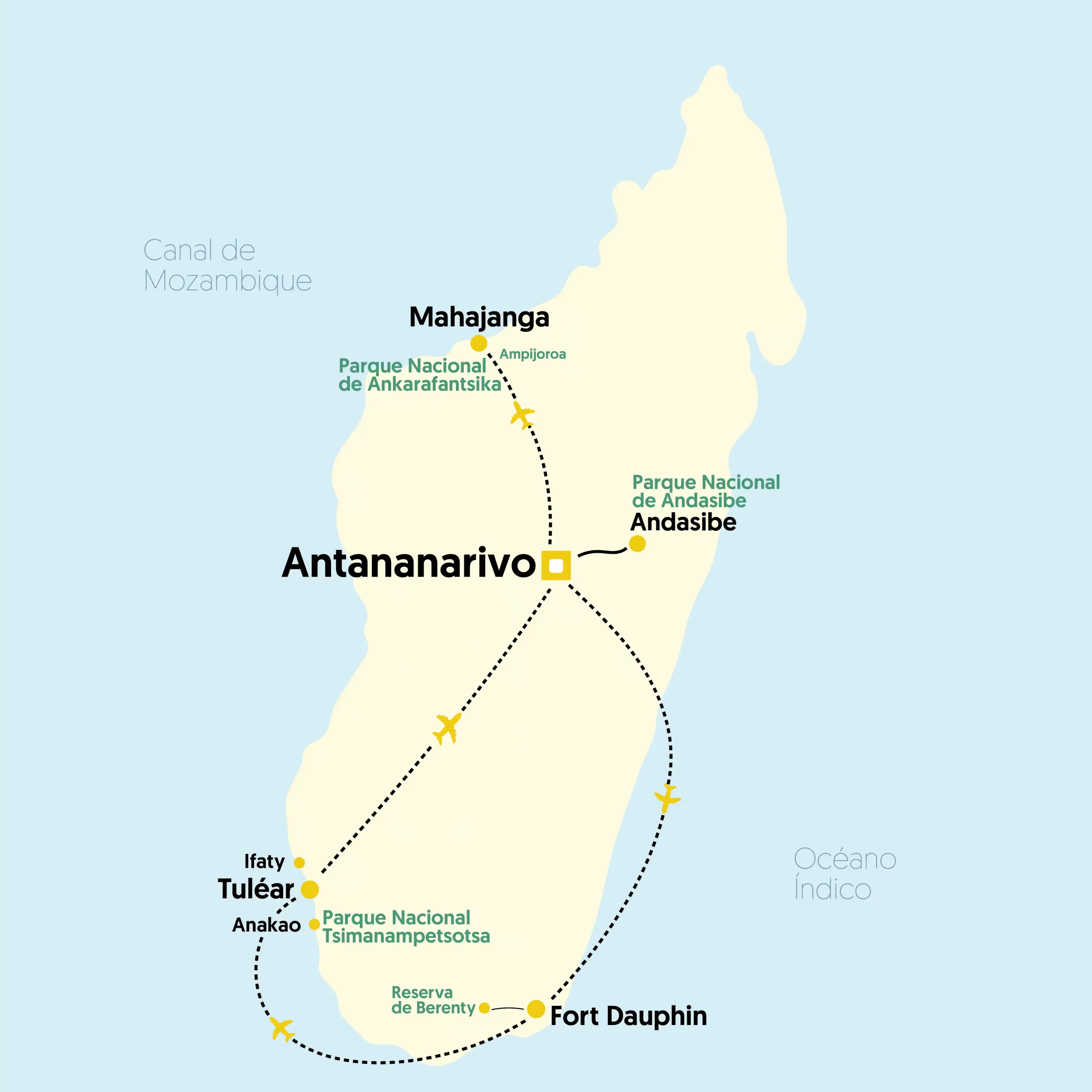
Madagascar offers a birdwatching and wildlife experience unlike any other in the world. This unique island, the fourth-largest on the planet, is often referred to as the “Eighth Continent” thanks to its extraordinary biodiversity and exceptional natural heritage.
After millions of years of isolation, its flora and fauna have evolved independently, resulting in a concentration of unique species that is virtually unmatched anywhere else. Madagascar’s biological diversity is simply fascinating.
The country is home to five families of endemic birds, as well as an extraordinary collection of unique species that offer magnificent opportunities for nature photography.
Throughout the trip, we’ll also spend time observing and photographing some of the island’s most iconic animals, such as lemurs, colorful chameleons, and flora so unique that it has turned Madagascar into a veritable laboratory of evolution.
Virtually all of the animal and plant species we’ll encounter are endemic to the island. However, many of them are threatened by ongoing habitat loss, making Madagascar one of those destinations that every nature lover should visit at least once in their lifetime.
Itinerary
DAY 1
ARRIVAL ANTANANARIVO
Arrival at the capital’s airport, visa procedures, meet-and-greet with IndigoBe’s Spanish-speaking guide, transfer to the hotel, and a welcome meeting where we’ll review the itinerary, the target species, and some tips for making the most of your birdwatching and photography days.
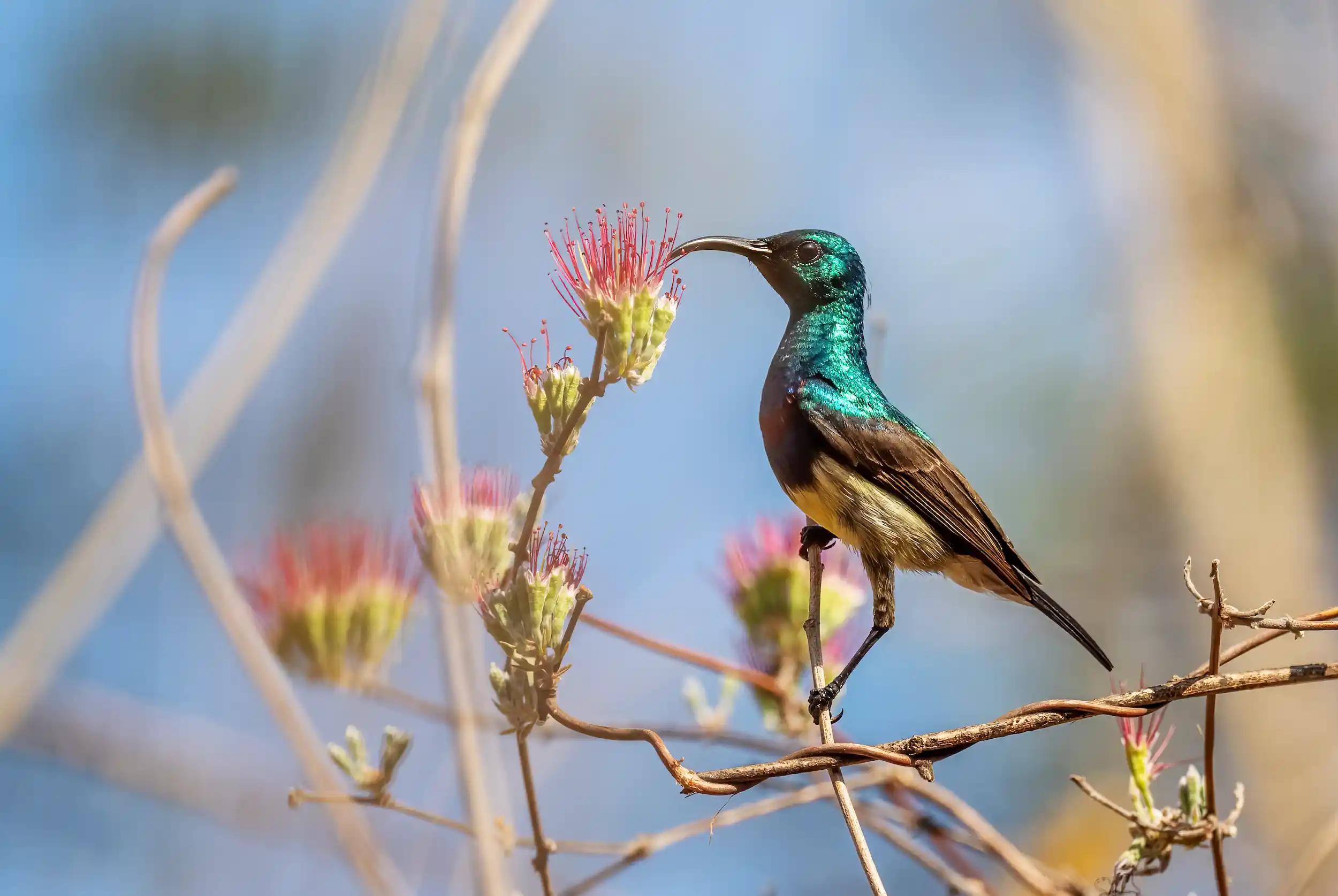
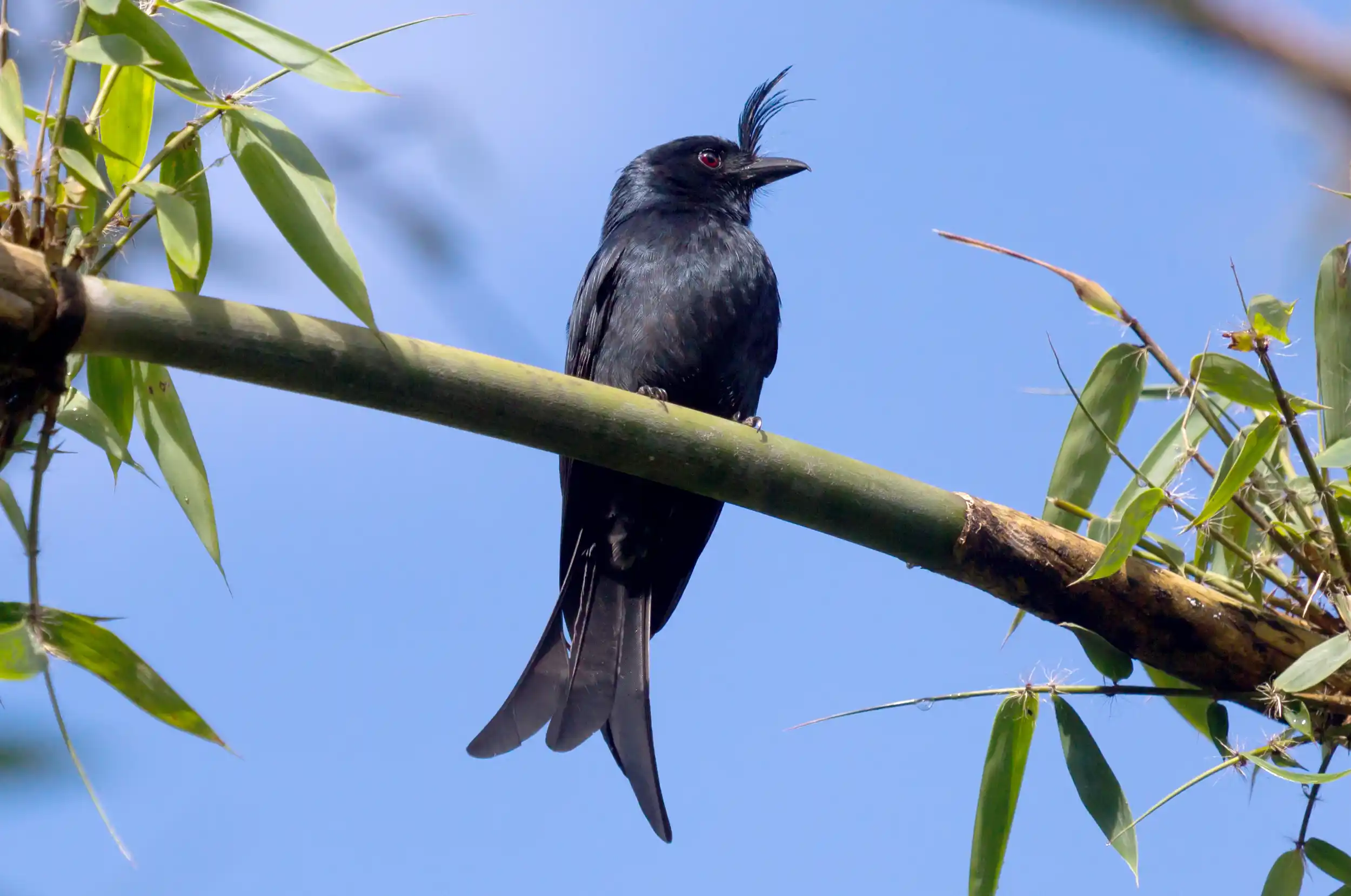
Depending on our arrival time, we can get a first glimpse of the Malagasy capital or enjoy the gardens at our lodging, where it’s already possible to spot some of the most common birds of the Highlands, such as the Madagascar Bulbul (Hypsipetes madagascariensis), the Red Fodi (Foudia madagascariensis), the Madagascar Crested Drongo (Dicrurus forficatus), or the elegant Madagascar Sunbird (Cinnyris sovimanga).
After breakfast, we’ll head east across the island through the fertile Central Highlands. The journey will take us past rice terraces, small traditional villages, and landscapes dotted with eucalyptus and pine forests before we enter the lush tropical rainforest of Andasibe, one of the most iconic spots for observing endemic birds.
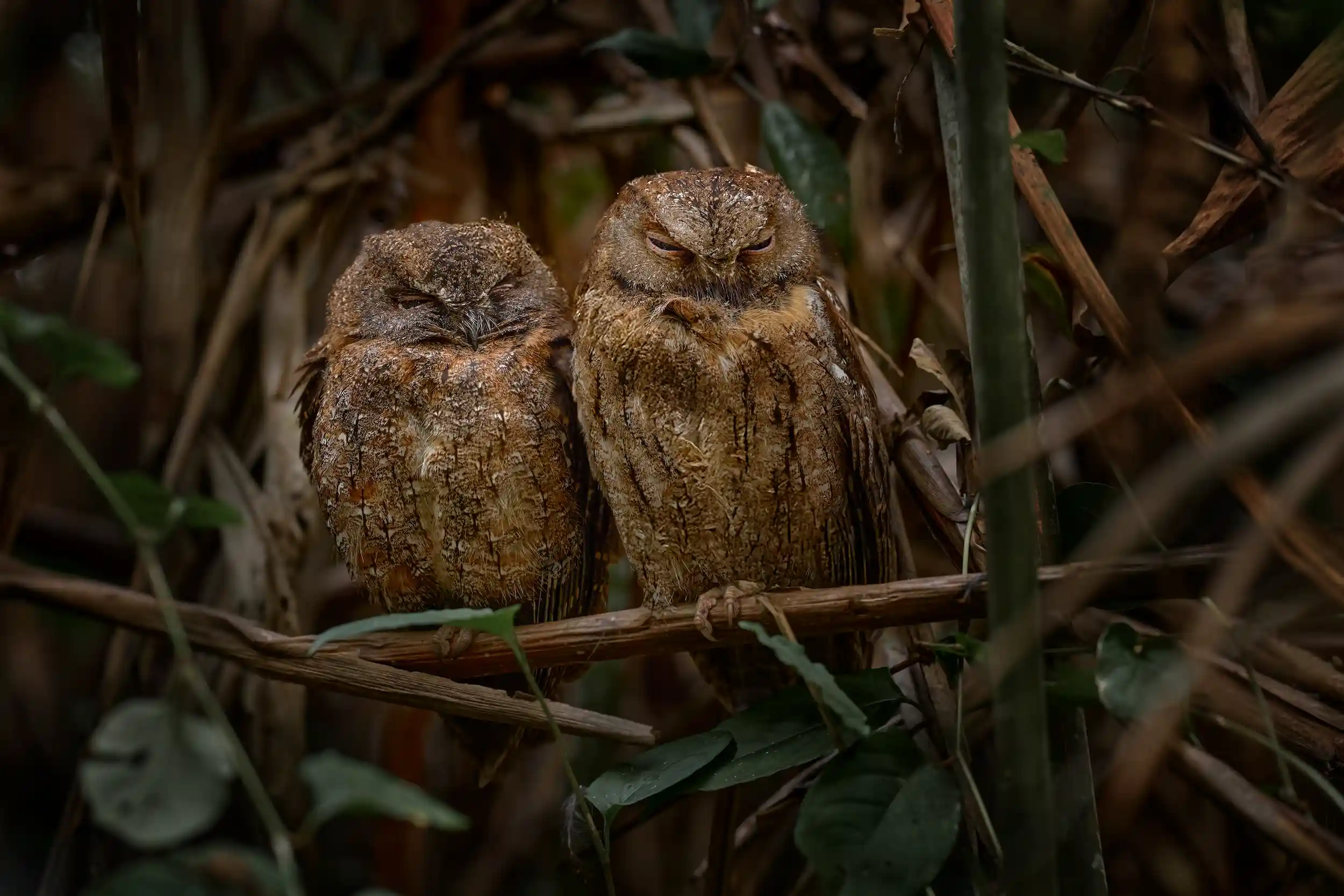
After lunch, we’ll go on our first field trip. The trails surrounding the park offer excellent opportunities to spot such iconic species as the Madagascar Pygmy Kingfisher (Corythornis madagascariensis), the Madagascar Blue Dove (Alectroenas madagascariensis), the Malagasy Paradise Flycatcher (Terpsiphone mutata), the Malagasy Scops Owl (Otus rutilus), and the elusive Madagascar Cuckoo (Cuculus rochii).
As night falls, we'll head out once again in search of the island's extraordinary nocturnal wildlife. It will be time to discover tiny mouse lemurs, leaf-tailed geckos, endemic frogs, and some of the world's most amazing chameleons.
Over the course of two full days, we’ll explore the primary forests of Analamazaotra and Mantadia, considered two of the best places in Madagascar for forest birdwatching. At dawn, the breathtaking call of the indri (Indri indri) will accompany our first hikes as we traverse trails surrounded by tree ferns, orchids, and centuries-old trees.
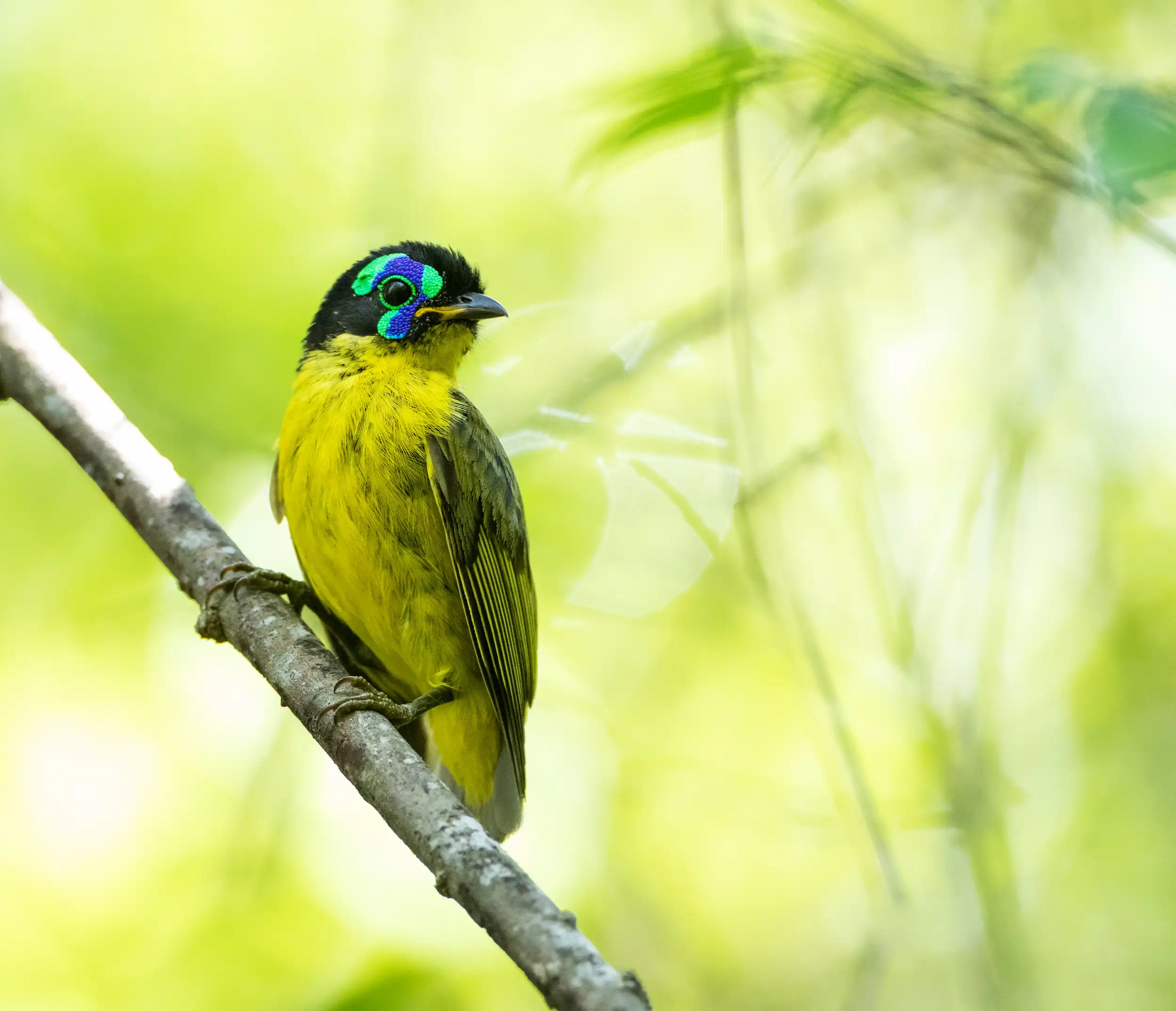
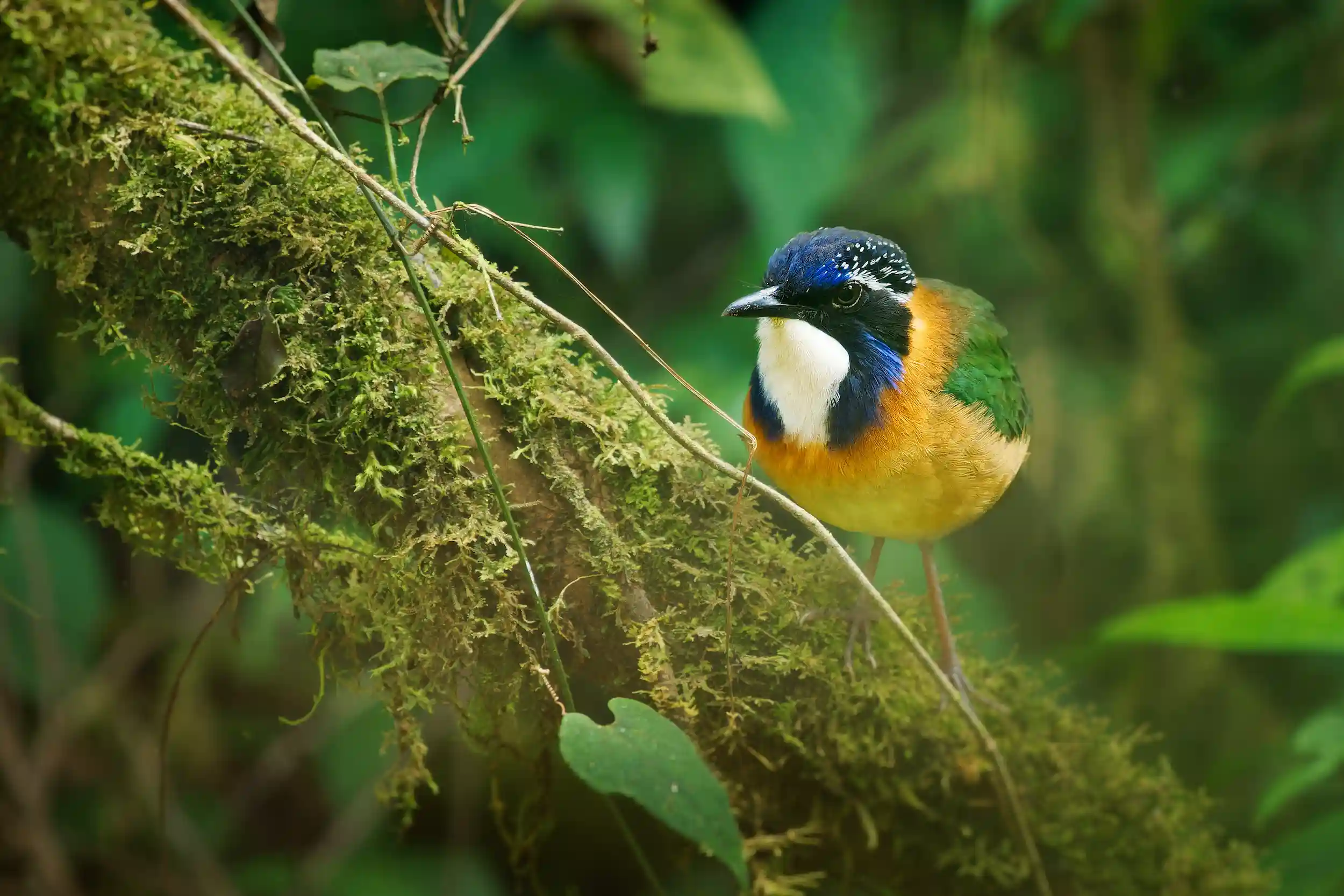
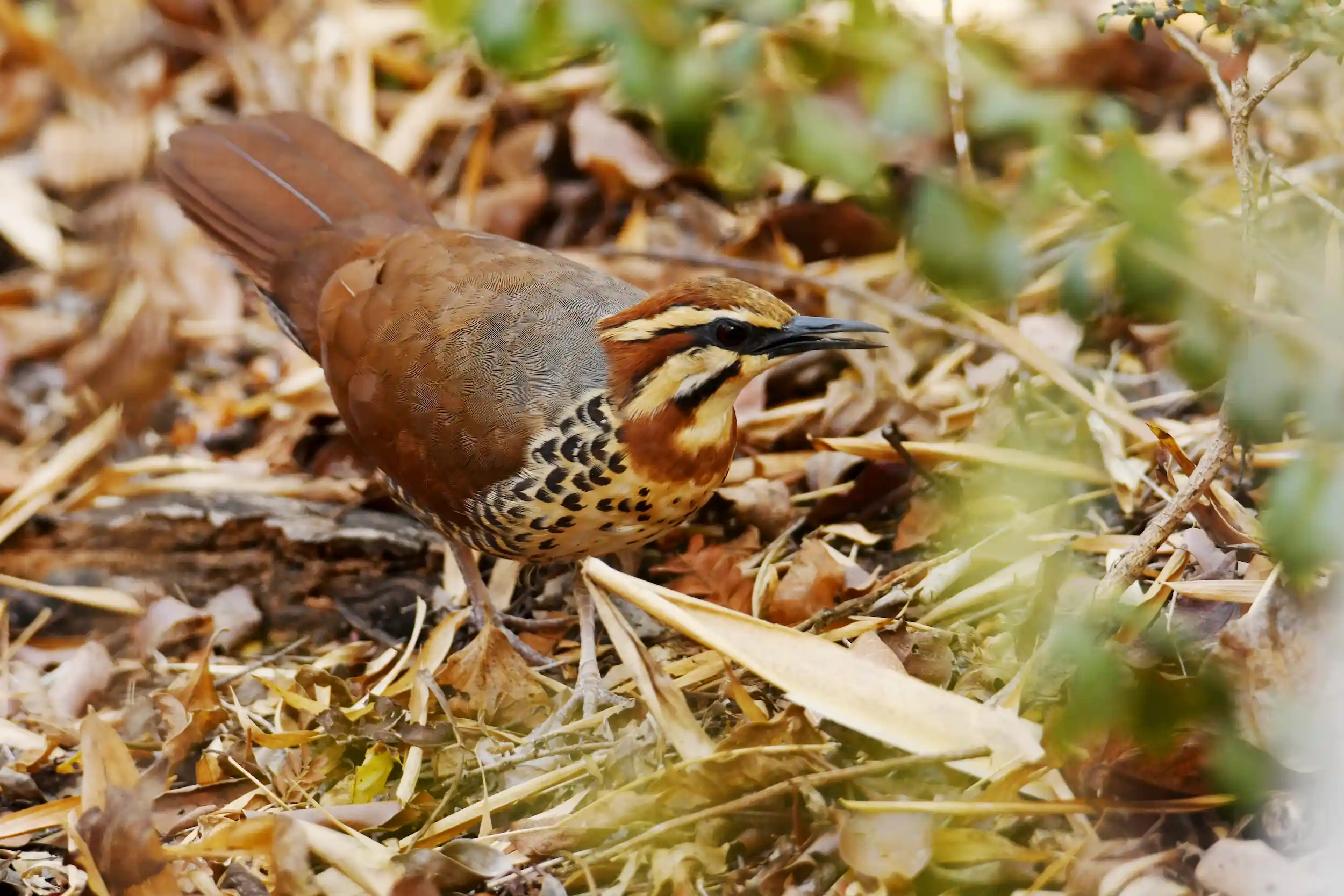
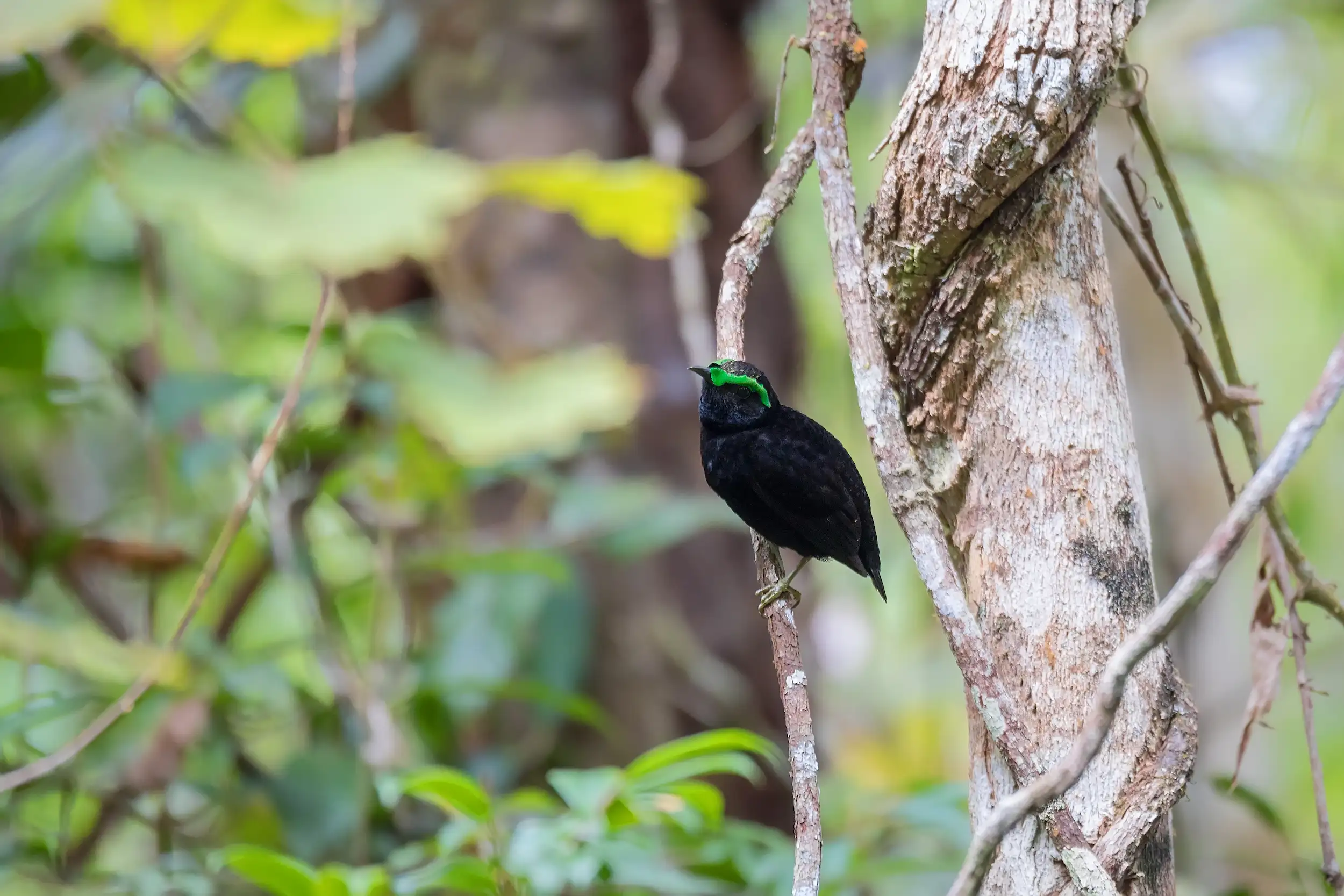
The extraordinary diversity of this ecosystem will allow us to spot some of the species most sought after by any birdwatcher: the Land Cuckoo-Pitta (Atelornis pittoides), the Scaly Ground Rat (Geobiastes squamiger), the spectacular Tylas's Vanga (Tylas eduardi), the Long-billed Bernieria (Bernieria madagascariensis), the Velvet Asity (Philepitta castanea), the Blue Coua (Coua caerulea), the Spectacled Tetraka (Xanthomixis zosterops), and the tiny Madagascar Pygmy Kingfisher (Corythornis madagascariensis).
Nighttime excursions will increase our chances of spotting the Collared Nightjar (Gactornis enarratus), the Madagascar Scops Owl (Otus rutilus), and an extraordinary variety of nocturnal amphibians, reptiles, and lemurs.
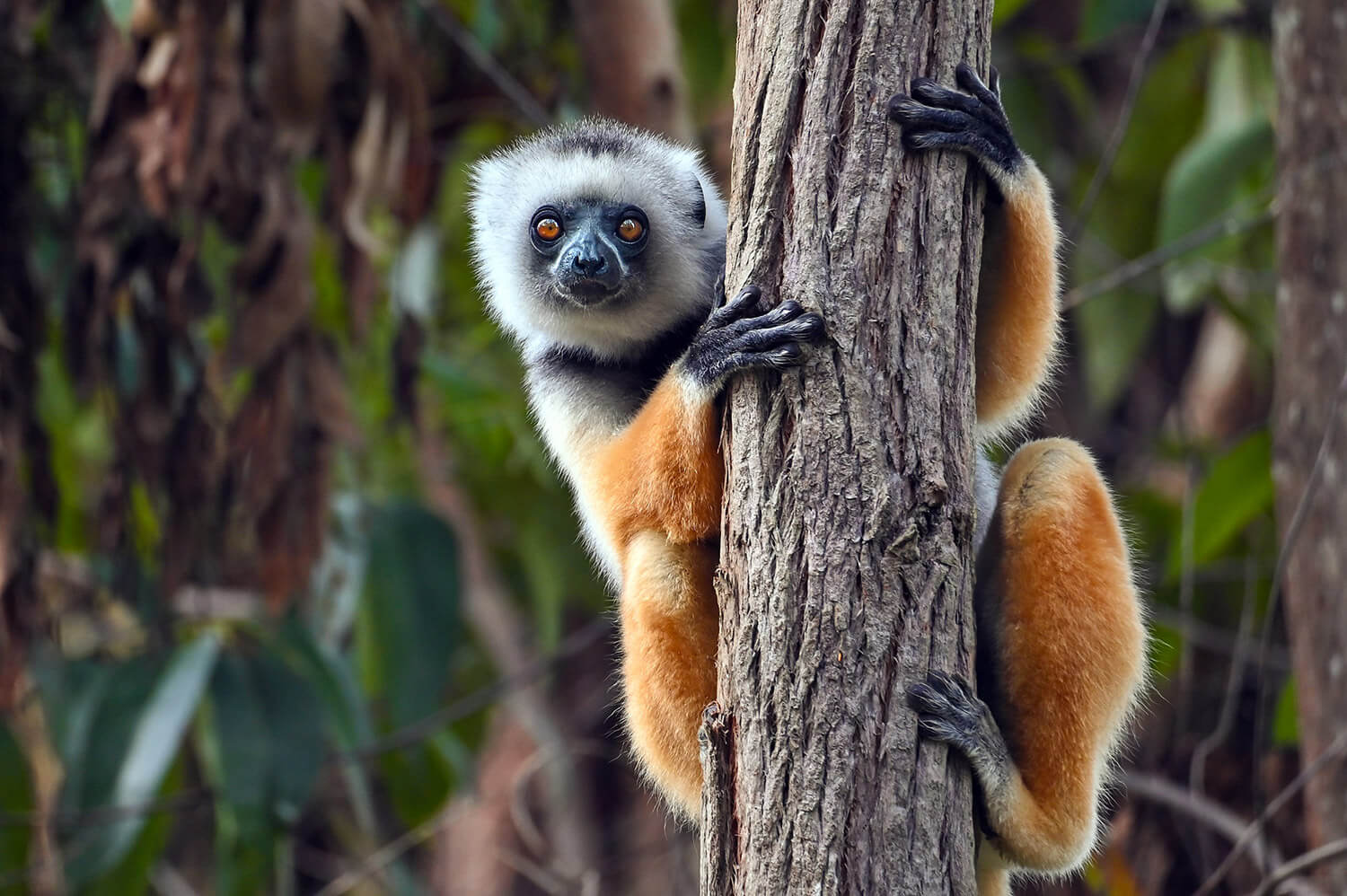
Other wildlife:Indri indri, Hapalemur griseus, Avahi laniger, Propithecus diadema.
RELAIS DE MANTADIA 3*.
VAKONA FOREST LODGE 3*.
Breakfast
Dinner
DAY 5
ANDASIBE / ANTANANARIVO
Before leaving Andasibe, we’ll take one last walk through the forest, taking advantage of the early morning hours when bird activity is at its peak. This will be another opportunity to spot species that have been elusive during previous days and to observe the mixed flocks flying through the canopy.
We’ll be able to look again for the Climbing Vanga (Hypositta corallirostris), the White-headed Vanga (Artamella viridis), the Blue Vanga (Cyanolanius madagascarinus), the Dark Newtonia (Newtonia amphichroa), the Yellow-crested Jery (Hartertula flavoviridis), and the Forest Fodi (Foudia omissa). We’ll also keep an eye on the sky for the possible sighting of Henst’s Goshawk (Accipiter henstii), one of Madagascar’s most impressive forest raptors.
After breakfast, we’ll begin our return trip to Antananarivo. Along the way, we’ll make the necessary stops to rest and watch birds in the rice paddies, wetlands, and open areas of the Highlands.
Featured Species: Climbing Vanga, White-headed Vanga, Blue Vanga, Dark Newtonia, Jery Colicuña, Forest Fodi, Henst's Goshawk.
AU BOIS VERT LODGE 4*.
Breakfast
Dinner
DAY 6
ANTANANARIVO / FORT DAUPHIN / BERENTY
Transfer to the airport to catch the flight to Fort Dauphin, a city nestled between the Indian Ocean, the Anosy Mountains, and some of the last remaining rainforests in southeastern Madagascar.
Upon our arrival, we will continue by road toward the Berenty Reserve. The landscape will gradually change: we will leave the green coastal mountains behind and travel through a drier region dominated by sisal plantations, thorny scrub, and gallery forests along the Mandrare River.
During the tour, we’ll be able to spot some of the first birds characteristic of the south, such as the Giant Coua (Coua gigas), the Malagasy Lovebird (Agapornis canus), the Malagasy Sandgrouse (Pterocles personatus), the Curl-billed Vanga (Vanga curvirostris), and the Frances’s Sparrowhawk (Accipiter francesiae).
Late in the afternoon, we’ll arrive in Berenty, famous for its ring-tailed lemurs and Verreaux’s sifakas, but also for how easily you can spot and photograph numerous dry-forest birds there.
We will spend the day exploring the gallery forests and dry scrublands of the Berenty Reserve. The flat, open trails offer excellent conditions for wildlife viewing and photography.
Among the most distinctive birds, we’ll look for the Giant Coua (Coua gigas), which is often seen walking through the leaf litter; the tiny Madagascar Sandgrouse (Turnix nigricollis); the Thick-billed Roller (Eurystomus glaucurus); the Lesser Vasa Parrot (Coracopsis nigra), the Malagasy Crested Drongo (Dicrurus forficatus), and the Malagasy Paradise Flycatcher (Terpsiphone mutata).
Berenty is also one of the best places in Madagascar to photograph the Verreaux's sifaka (Propithecus verreauxi), famous for its sideways leaps on the ground, and the ring-tailed lemur (Lemur catta), which moves through the forest in large groups.
At dusk, we'll go on a night excursion to try to spot the Torotoroka Scops Owl (Otus madagascariensis) and the impressive White-browed Owl (Athene superciliaris), as well as nocturnal lemurs, tenrecs, and geckos.
Other wildlife: Verreaux's langur, ring-tailed lemur
BERENTY LODGE
Breakfast
Dinner
DAY 8
BERENTY / FORT DAUPHIN / ANTANANARIVO
We'll take one last sunrise walk through the reserve—a particularly good time to photograph the sifakas as they come down to the ground and to observe the activity of the forest birds.
We will try to complete our sightings of species such as the Giant Coua (Coua gigas), the Curved-billed Vanga (Vanga curvirostris), the Madagascar Lovebird (Agapornis canus), the Madagascar Kestrel (Falco newtoni), and the Madagascar Bulbul (Hypsipetes madagascariensis).
Next, we'll drive back to Fort Dauphin to catch our flight to Antananarivo. The journey will give us another chance to appreciate the transition from the arid landscapes of the interior to the more humid vegetation of the southeastern coast.
Transfer to the airport and flight to Tulear, on the southwest coast of Madagascar. From there, we’ll continue by road to Ifaty, passing through arid landscapes, salt flats, coastal scrublands, and small Vezo fishing villages.
This region is part of one of the most unique biogeographic zones on the planet. Its thorny forest, dominated by Didiereaceae, baobabs, and euphorbias, is home to numerous bird species found nowhere else in Madagascar.
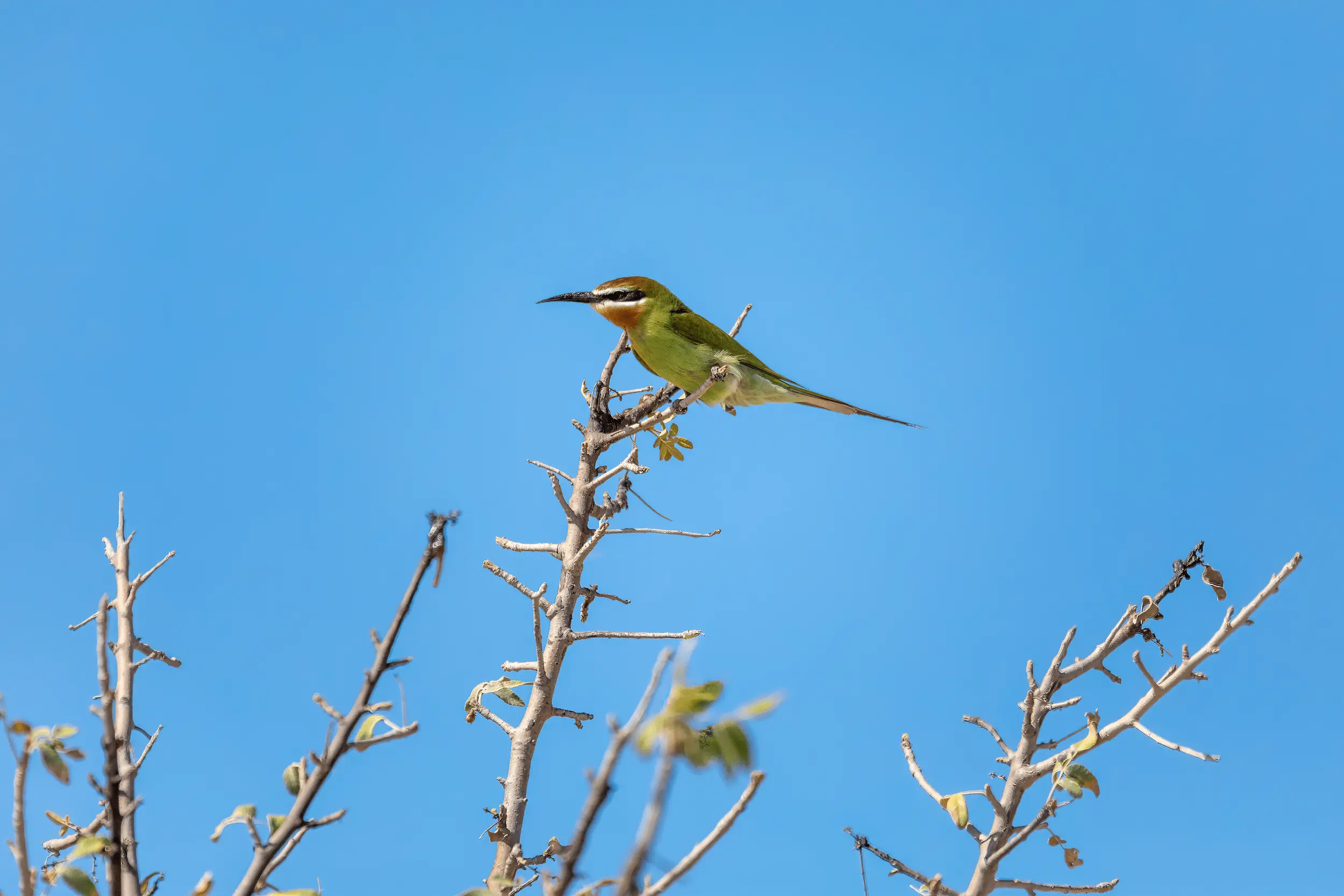
Along the way, we’ll begin to spot species such as the Sakalava Weaver (Ploceus sakalava), the Madagascar Bee-eater (Merops superciliosus), the Madagascar Cisticola (Cisticola cherina), the Madagascar Dwarf Dove (Nesoenas picturatus), and the Madagascar Kestrel (Falco newtoni).
Depending on our arrival time, we’ll take an initial walk around the area near our lodging to get a feel for the thorny forest.
We'll set out before dawn to explore the extraordinary thorny forest of Ifaty, avoiding the hottest part of the day and taking advantage of the time when the birds are most active.
Our main targets will be two of the most iconic species in southern Madagascar: the Long-tailed Ground Roller (Uratelornis chimaera), one of the most sought-after birds by ornithologists visiting the island, and the Subdesert Mesite (Monias benschi), restricted to a narrow strip in the southwest.
We will also seek to Lafresnaye's Vanga (Xenopirostris xenopirostris), the Archbold's Newtonia (Newtonia archboldi)the Thamnornis (Thamnornis chloropetoides), the Subdesert Warbler (Nesillas lantzii), the Running Coua (Coua cursor), the Crested Coua (Coua cristata), the Red-headed Coua (Coua ruficeps), and the Malagasy Hoopoe (Upupa marginata).
The unique shapes of the vegetation, the light of dawn, and the presence of many birds make this day one of the best of the trip for nature photography.
We will leave Ifaty and head toward Tulear to board a boat bound for the small coral island of Nosy Ve. As we sail through the Channel of Mozambique, we’ll have the chance to observe seabirds and coastal birds before disembarking at one of the most unique birding destinations in southern Madagascar.
Nosy Ve is home to a large colony of Red-tailed Tropicbirds (Phaethon rubricauda), an elegant seabird that nests directly on the sand and beneath the island’s low vegetation. We’ll be able to watch their acrobatic flights and, while always maintaining a respectful distance, photograph both adults and juveniles.
On the sandbars and in the intertidal zones, we’ll look for shorebirds such as the Madagascar Plover (Charadrius thoracicus), the White-fronted Plover (Charadrius marginatus), the Common Greenshank (Tringa nebularia), and the Common Turnstone (Arenaria interpres).
Notable species: Red-tailed Shrike, Madagascar Plover, White-fronted Plover, Common Sandpiper, Common Turnstone.
ANAKAO OCEAN LODGE 3*SUP
Breakfast
Dinner
DAY 12
ANAKAO / TSIMENAMPETSOTSE NATIONAL PARK / BEHELOKA or AMBOLA
A day spent visiting Tsimanampetsotse National Park.
BEHELOKA LODGE
LE DOMAINE D'AMBOLA
Breakfast
Dinner
DAY 13
BEHELOKA OR AMBOLA / TULEAR / ANTANANARIVO
Depending on the flight schedule, we will spend part of the morning birdwatching in the wetlands, salt flats, and open areas near Tulear.
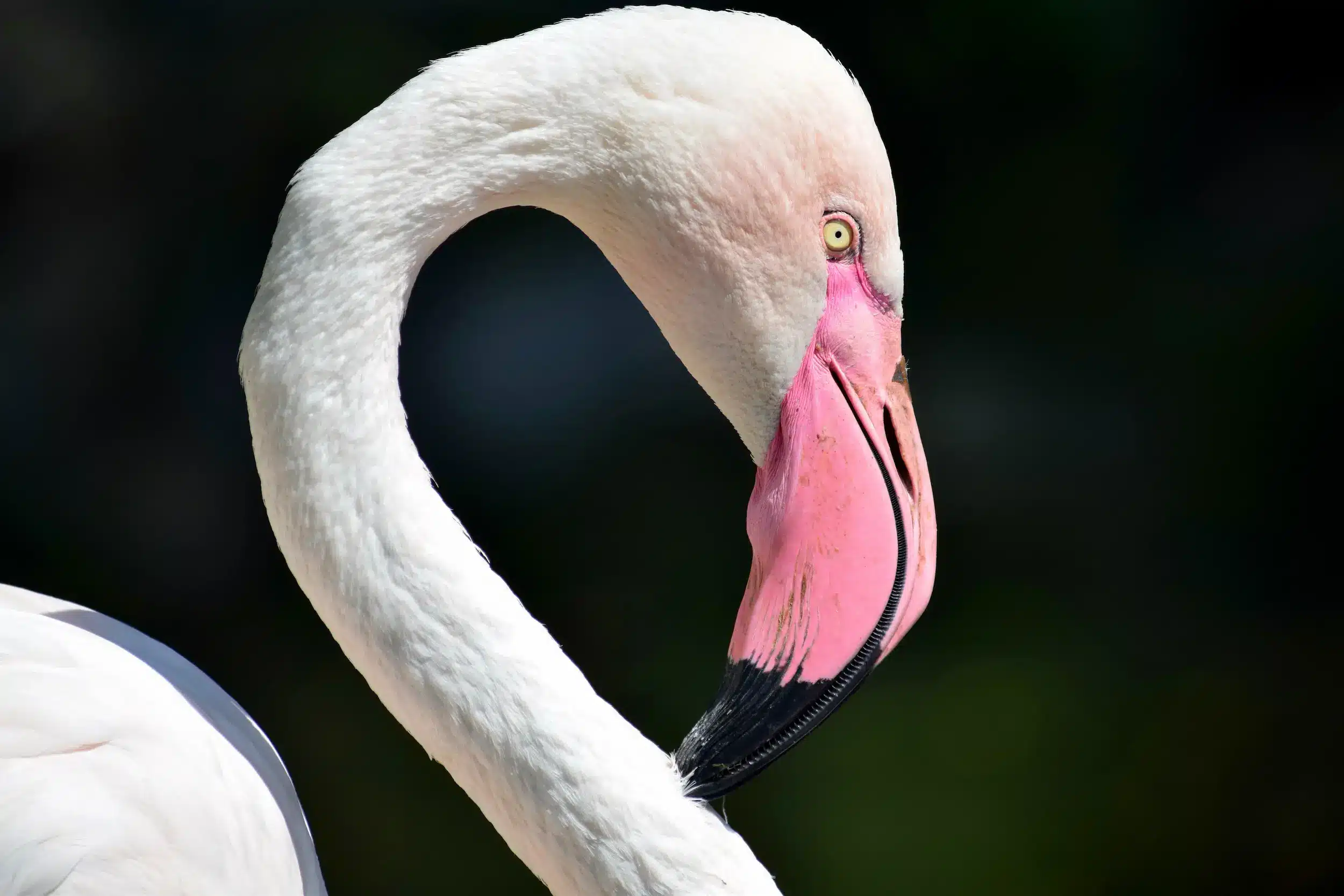
These habitats can support large numbers of waterfowl and shorebirds. We will look for species such as the Madagascar Plover (Charadrius thoracicus), the Humblot’s Heron (Ardea humbloti), the Madagascar Little Egret (Ardeola idae), the Dimorphic Egret (Egretta dimorpha), the Greater Flamingo (Phoenicopterus roseus), and various species of migratory sandpipers and turnstones.
In the scrubland areas, we can also spot the Madagascar Cisticola (Cisticola cherina), the Madagascar Bee-eater (Merops superciliosus), the Red Fody (Foudia madagascariensis), and the Madagascar Capuchin (Lepidopygia nana).
Transfer to the airport and return flight to Antananarivo. Arrival and check-in.
Notable species: Madagascar Ringed Plover, Humblot's Heron, Madagascar Little Egret, Dimorphic Heron, Common Flamingo, Madagascar Cistocola.
AU BOIS VERT LODGE 4*.
Breakfast
Dinner
DAY 14
ANTANANARIVO / MAHAJANGA / BETSIBOKA DELTA
Flight to Mahajanga, on the northwest coast of Madagascar. Upon arrival, we’ll head to the pier to explore the Betsiboka River delta by motorboat—a vast network of canals, mangroves, mudflats, and islets.
The day’s activities will focus on searching for two of Madagascar’s rarest and most endangered waterbirds: the Bernier’s Teal (Anas bernieri) and the Malagasy Sacred Ibis (Threskiornis bernieri). Both species are closely associated with the mangroves and coastal wetlands of the island’s western region.
We’ll also be able to see the Humblot’s Heron (Ardea humbloti), the Dimorphic Egret (Egretta dimorpha), the Greater Flamingo (Phoenicopterus roseus), the African Tantalus (Mycteria ibis), and, with any luck, the rare African Spoonbill (Platalea alba).
Boating offers wonderful opportunities to photograph waterfowl in flight and to understand the importance of mangroves for the conservation of Madagascar's birdlife.
After breakfast, we’ll set out for the Ampijoroa Forest Station, located within Ankarafantsika National Park. Along the way, we’ll pass through savannas, rice paddies, small wetlands, and expanses of dry deciduous forest.
Upon our arrival, we will begin exploring the area around the station, where it is common to spot the Thick-billed Roller (Eurystomus glaucurus), the Lesser Vasa Parrot (Coracopsis nigra), the Malagasy Crested Drongo (Dicrurus forficatus), the Madagascar Hoopoe (Upupa marginata), the Madagascar Green Pigeon (Treron australis), and the Sakalava Weaver (Ploceus sakalava).
In the late afternoon, we’ll head to Lake Ravelobe, an important wetland surrounded by forest. There, we’ll look for the endangered Madagascar Osprey (Icthyophaga vociferoides), the Humblot’s Heron (Ardea humbloti), the Malagasy Jacana (Actophilornis albinucha), and the White-throated Water Rail (Dryolimnas cuvieri).
We will spend a full day exploring the trails of the Ankarafantsika deciduous dry forest, one of Madagascar's most important birdwatching sites.
Among our top priorities will be the elusive White-breasted Mesite (Mesitornis variegatus), the spectacular Schlegel’s Asity (Philepitta schlegeli), and the very localized Van Dam’s Vanga (Xenopirostris damii), one of the most endangered and elusive species along the entire route.
We will also seek to Coquerel's Coua (Coua coquereli), the Red-headed Coua (Coua ruficeps)the Madagascar Ibis (Lophotibis cristata)the Madagascar Pygmy Kingfisher (Corythornis madagascariensis), the Red Vanga (Schetba rufa), the Curlew-billed Vanga (Vanga curvirostris), the White-headed Vanga (Artamella viridis), and Chabert's Vanga (Leptopterus chabert).
The reserve is also home to a remarkable diversity of lemurs. During the day, we may spot Coquerel’s sifaka (Propithecus coquereli) and the common brown lemur (Eulemur fulvus). A night hike will allow us to search for mouse lemurs, woolly lemurs, chameleons, and other forest dwellers.
Notable species: White-breasted Mesite, Schlegel's Asity, Van Dam's Vanga, Coquerel's Coua, Red-capped Coua, Red Vanga, Malagasy Ibis.
Other wildlife: Propithecus coquereli, Eulemur fulvus.
BLUE VANGA LODGE
Breakfast
Dinner
DAY 17
RAVELOBE / MAHAJANGA / ANTANANARIVO
Last outing around Lake Ravelobe and the trails near the forest station.
It will be another opportunity to observe the Madagascar Osprey (Icthyophaga vociferoides)—a pair of which is often found around the lake—as well as the Malagasy Jacana (Actophilornis albinucha), the Humblot’s Heron (Ardea humbloti), the White-throated Water Rail (Dryolimnas cuvieri), and the Allen’s Moorhen (Porphyrio alleni). At the forest’s edge, we may encounter groups of Slender-billed Vangas (Falculea palliata) and Blue Vangas (Cyanolanius madagascarinus).
After the visit, transfer to the airport to catch the flight back to the capital.
Visit Tsarasotra Park and Lake Alarobia (designated a Ramsar Site) right in the heart of the city.
Located in the heart of Antananarivo, Lake Alarobia is a small private sanctuary that protects a significant population of waterfowl, particularly ducks and herons.
Among the most common species are the white-faced whistling duck, the red-billed teal, small populations of the blue-billed teal, the warty-faced duck, and, occasionally, the ruddy whistling duck. With a little luck, we may also spot one of the most endangered ducks on the planet: the Meller’s duck (Anas melleri).
The lake’s shores are also home to a significant colony of herons and egrets that use the sanctuary as a resting and breeding ground. Among them are the elegant Madagascar heron, the dimorphic egret, and, on occasion, the rare African tantalus, a species seldom seen in Madagascar.
Numerous Mascarenian swallows can often be seen flying over the wetland, sometimes accompanied by Madagascar swifts and little swifts.
After the tour, transfer to Antananarivo International Airport for the return flight.
And so comes to an end an expedition that has allowed us to explore some of Madagascar’s most unique ecosystems: the eastern rainforest, the gallery forests of the far south, the thorny forest, the coastal wetlands, the Betsiboka mangroves, and the dry forests of Ankarafantsika.
Throughout the trip, we will have had the opportunity to spot representatives of the five families of birds endemic to the Malagasy region, as well as vangas, couas, asities, lemurs, chameleons, and an extraordinary variety of species that have evolved over millions of years of isolation.
5 travelers in private: in preparation
6 travelers in private: in preparation
7 travelers in private: in preparation
Single supplement: in preparation
This route operates exclusively in October, November, and December.
SERVICES INCLUDED
Private Services
Lodging in the hotels provided or similar
4x4 vehicle with driver and fuel. For groups of 5 or more passengers,two 4x4 vehicles will be used to ensure passenger comfort.
Transfers airport-hotel-airport mentioned in the program
Motorboat Transfers: Tulear–Anakao–Tulear
Spanish-speaking guide specializing in birdwatching throughout the entire tour
Half-Board Plan (except in Antananarivo)
All visits and excursions mentioned as INCLUDED in the program.
Entrance fees to National Parks and Reserves
Local guides (obligatory) in parks and reserves
Taxes (Tourist, Stay and Municipal)
Map of Madagascar
Welcome gifts
Reception in Spanish by an INDIGO BE guide at the airport
Telephone and whatsapp customer support in Spanish 24h 7/7 at destination
On-site assistance in case of emergency in English 24h 7/7 in Antananarivo
Reconfirmation of domestic and return flights
24-hour emergency service in Spanish for family members
Digital Welcome Kit
Special Birds E-Book
SERVICES NOT INCLUDED
International and domestic airline tickets
Meals not specified in the program
Beverages
Visa
Personal expenses
Medical Insurance
Tips
All our departures called "PRIVATE", will have all the services exclusively, except for some transfers made by the hotel itself that will be in common with other clients.
The order of the visits and excursions can be modified according to local constraints (air schedules, runway or road conditions, for example). If certain visits and/or excursions cannot be carried out for any reason beyond our control, we will try to substitute them whenever possible.
Due to the high demand during Easter, Christmas, New Year's Eve and the months of August, September, October and November, please book as far in advance as possible as places are very limited.
CHARACTERISTICS OF OUR TRIPS
Our trips are designed from knowledge, we have been residents on the island for more than 20 years (2006-2026) and our team carries out more than 17 annual surveys throughout the geography of the island, to verify on the ground the state of parks, trails, hotels, new developments and discover new treasures that are still hidden in our island-continent and that for the moment we try to preserve until we have a policy of environmental protection. Our update is almost daily.
Any tour in Madagascar leaves room for the unexpected, hence we ask for your flexibility in approaching the trip as travelers and not as conventional tourists.
To participate in our trips, a minimum level of physical fitness is required, otherwise you will not be able to enjoy the parks, landscapes, or some of the animist villages farther away from the conventional routes.
Our adventure trips are not for everyone, they are participatory trips, in which you will not be made to row or wash your cutlery, for this we give employment to the local population, however, we want your passage through the island to cause the least possible impact, neither environmental nor social, that is where we ask for your collaboration.
The hotels are varied, from some 5* to simple lodges, depending on the hotel infrastructure. Adventure is not incompatible with comfort, we will never camp (free camping is prohibited in Madagascar, it is only possible in "authorized" places although they do not have any infrastructure similar to a campsite, no toilets or showers) if right next door we have a minimally correct accommodation and that our passage can benefit the local population. We always try to include the best hotels available, but sometimes we are forced to use simple lodges because the location does not have more hotel infrastructure or because it is located in an exceptional place that deserves the stay.
Madagascar does not have a tourist infrastructure like neighboring countries in their safaris, but that gives it the charm of an unspoiled and uncrowded country (150,000 tourists per year). We ask for an open spirit and large doses of patience to our travelers. That way you will enjoy your trip much more.
Points of sale via and our partner agencies around the world
Over 20 years
of DMC expertise in Madagascar and the Indian Ocean.
A travel Magazine
to inspire your next journey, from the comfort of your sofa
Guides and Fixers
Expert English-speaking local guides
We are
committed to sustainable tourism
97%
of satisfaction
20250518
A phenomenal trip
Just a few notes to thank you for your hard work and patience. It was a phenomenal trip, and I'm already itching to go back. I was delighted with the destination, the selection of activities, and the organization. Nomad Photo Expeditions Photography Group.
Harry Fisch ESSENCES OF THE SOUTH
An Extraordinary Journey
I highly recommend it—the service is direct, clear, and friendly. Sylvia, Jaume, and Sergi are lovely.
Small, well-organized groups.
Santa, our guide, is the best.
And Madagascar—with its lemurs, its baobabs, its people, and its landscapes—stole my heart; I don't know which one to choose.
A dream come true!!
We're really looking forward to going back and exploring more parts of the island. And we'll definitely be doing it with Indigo Be!!!
Montserrat Ros DISCOVER MADAGASCAR
Impeccable organization
Everything was excellent! I highly recommend both the country—with its contrasting landscapes and people—and the travel agency, which was impeccably organized! Thanks to Sylvia and Jaume for organizing everything, and of course to Luca and Mami for showing us around the whole country!
Glòria Ramon ESSENCES OF THE SOUTH
Professionals who love their work
Once again, to the entire team: after 25 years of traveling and having explored much of Africa, you can feel flattered because this is the first time we’ve met such a professional group of people who love their work and put so much passion into showcasing and sharing their country. Thank you, Sylvia, for your attention and for being there when we need you. Of course, we’ll see you on your next adventure with Reunionesa.
Clara Montes REMOTE RIVER EXPEDITION
A highly qualified team
A flawlessly organized company with values I share, and a highly professional team that is extremely knowledgeable and dedicated to the travelers. They respect the country, its people, and nature, and through their guidance, they make us fall in love with Madagascar.
Antonio Maria Following the Green Heart
The Baobab Expedition: Tough but Intense
Back home and trying to take in everything we’ve learned. Thank you, Silvia, for joining us on this fantastic trip—it’s been a privilege to have you as our guide. As you saw, the group hit it off right from the first day, and the route was amazing. We highly recommend the Baobab Expedition to all travelers—it’s tough but rewarding.
Sara BAOBAB EXPEDITION
A Wonderful Trip Through Madagascar
These excellent professionals helped us have a wonderful trip through Madagascar. Thank you so much, Sylvia, Jaume, Sergi, Santa! (a great local guide), and the entire staff. We’ll definitely be back.
Norberto Rosseti ESSENCES OF THE SOUTH
You can really tell how much Indigo Be cares about the country
Lupe Bote BAOBAB EXPEDITION
An authentic experience
I chose the "Baobab Expedition" itinerary with Indigo Be, and it was a truly unforgettable experience... Indigo Be is a travel agency run by young professionals who love Madagascar and know it inside and out, and who share their passion and enthusiasm for the country with travelers.
Our guide, Jaume, has ensured that everything ran smoothly day after day, thanks to his efficiency and kindness.
Thanks to the entire team of professionals at Indigo Be, and a HUGE CONGRATULATIONS to Jaume "for a job well done." A big hug!!!!!
Elisabeth Segui BAOBAB EXPEDITION
A unique, surprising, and unforgettable island
Madagascar—it sounds like a faraway place, an animated movie, and impossible animals. It’s all that, and also a little-visited island nation that exudes African spirit, softened by Asian influences.
Canoe down a river through jungle canyons and sleep on its beaches, safe from crocodiles; venture deep into the jungle and listen to the sounds of its most distinctive animals, the lemurs; dive among tropical fish with the sound of humpback whales in the background; strolling at sunset along an avenue lined with giant baobabs; discovering breathtaking rock formations shaped like thousands of needles; savoring seafood seasoned with a touch of French influence; or simply strolling along a beach, waiting for the fishermen to return. All of that is Madagascar.
Madagascar promises a break from it all, adventure, and exoticism... and with Indigo Be, you can have it all!
Thank you for being such wonderful hosts on this unique, amazing, and unforgettable island.
Antonia Rubio BAOBAB EXPEDITION
Experiences that will stay with me for the rest of my life
Amid shadowy jungles, deep rocky canyons, and red-clay moors, I encountered sights and experiences that will stay with me for the rest of my life. And what better way to explore them than with the help of local experts like Indigo Be.
Raúl Martin MADA & SEYCHELLES ADVENTURE
Ready, set... GO!
Because every trip is different and every traveller is unique, you have the opportunity to co-create YOUR PERFECT TRIP with us. And you ask yourself, how?
1
2
3
OUR FIRST APPOINTMENT
A meeting via WhatsApp or Zoom with us to have a virtual tea or coffee and guide you on what we can offer you based on your travel requirements.
ROUTE DESIGN
We work with you to create a route that is 100% tailored to your preferences: accommodation, vehicle, guide, visits, activities, meetings...
SERVICES
We offer you the chance to enhance your trip with our little ‘pills’ that will make your experience unique and memorable.
Utilizamos cookies para garantizarle la mejor experiencia en nuestro sitio web. Si continúa utilizando este sitio, asumiremos que está satisfecho con él.



 Wildlife
 Active Travel


 Add Extensions to: Ranomafana National Park, Masoala National Park, or Namoroka National Park