

Traveling to Madagascar is a unique experience, but it’s important to take health precautions to ensure you can enjoy your trip safely.
There are no mandatory vaccinations required to enter Madagascar.
The yellow fever vaccine is only required if you are coming from countries where the disease is present (primarily certain countries in South America and Africa), since yellow fever does not exist in Madagascar. Please note that if you are coming from one of these countries or have a layover of more than 12 hours in a country where yellow fever is present, Madagascar will require proof of vaccination against this disease.
In general, vaccinations such as typhoid, hepatitis A and B, tetanus-diphtheria, measles, rubella, chickenpox, and, in some cases, rabies are usually recommended for travel to Madagascar. Malaria prophylaxis and strict measures to prevent mosquito bites are also advised. Check with the international vaccination center in your area.
Why is it important to pack a first-aid kit with special care when traveling to exotic destinations like Madagascar?
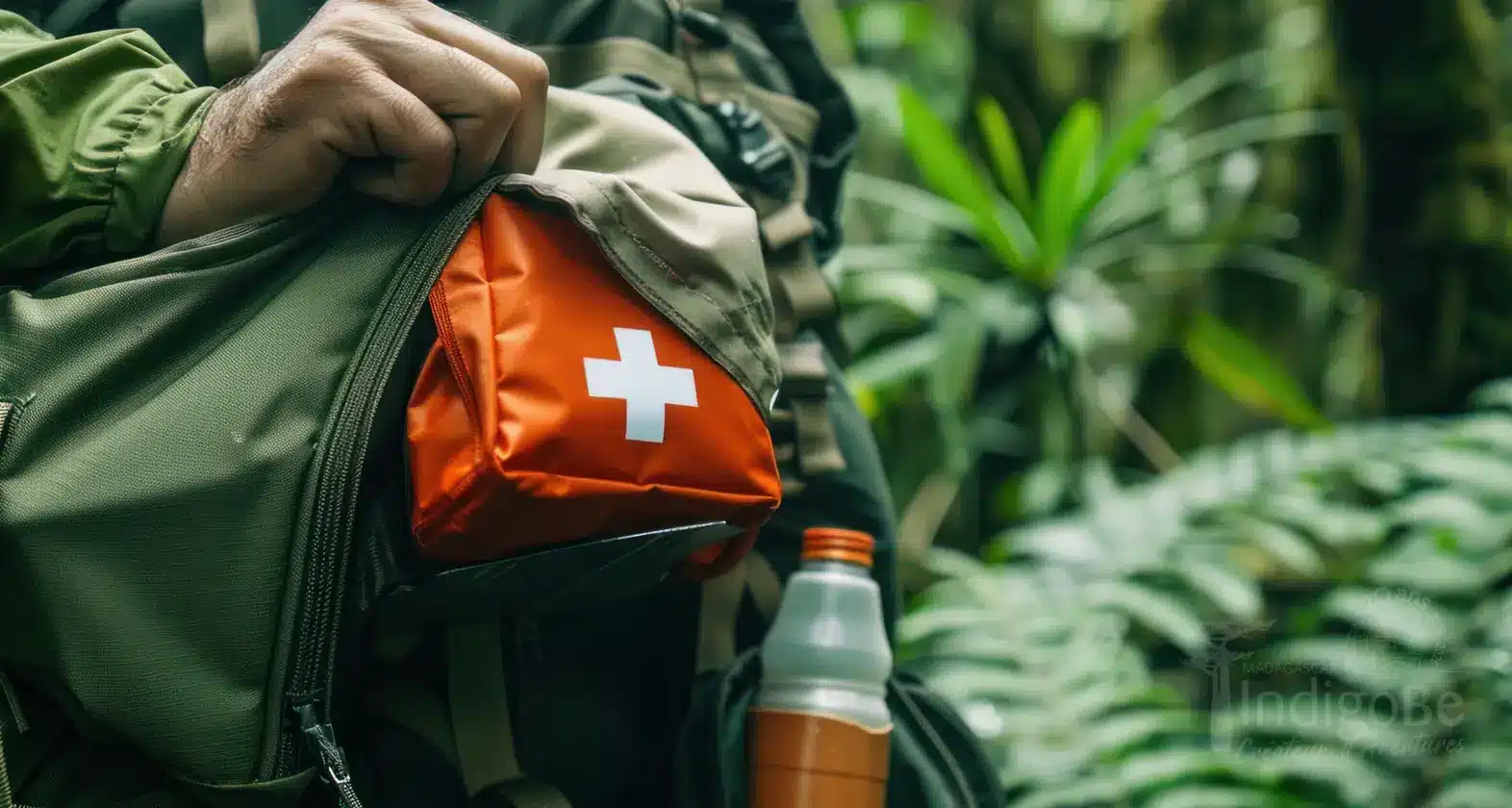
Traveling to distant and less common destinations requires taking extra precautions when it comes to your travel first-aid kit. Health, environmental, and safety conditions may be very different from what you’re used to. Here are the main reasons:
1. Risk of local diseases and health conditions
- Greater exposure to infections: In these places, diseases such as malaria, tuberculosis, and schistosomiasis are common—conditions that are rare in your home country.
- Specific vaccines and treatments: Malaria prophylaxis or other vaccines not included in a standard first-aid kit are recommended.
2. Limitations on Medical Care
- Unequal access to health care: In rural or remote areas, infrastructure may be very limited or nonexistent.
- Limited access to medications: Medications may be hard to find or may not meet quality standards.
3. Extreme environmental factors
- Climate and environment: intense heat, high humidity, high altitude, or dense jungles increase the risk of heatstroke, dehydration, insect bites, or infections.
- Fauna and flora: poisonous animals, insects, or plants can pose an additional danger.
4. Differences in Hygiene and Sanitation
- Food and Water: Consuming untreated water or undercooked food can cause traveler’s diarrhea and intestinal infections.
- Hygiene habits: Local sanitation standards may not be as strict, which increases the risk of infection.
5. Increased risk of accidents
- Active and adventure tourism: Activities such as hiking, scuba diving, and trekking increase the risk of injury.
- Transportation and road safety: Traffic laws are often less strict and may increase the risk of accidents.
Other Health and Prevention Considerations from Indigo Be
Don’t forget the most important thing!
1 MONTH BEFORE THE TRIP
- Pre-Travel Medical Consultation: Visit a center specializing in travel medicine to receive vaccinations such as those for hepatitis A and B and typhoid fever, among others, as well as malaria prophylaxis (atovaquone-proguanil, doxycycline, or mefloquine).
- Research your destination: Understanding specific health and environmental risks helps you be better prepared.
- We recommend starting to take probiotics about 15 days before your trip to protect your gut flora, since it’s common to experience stomach problems due to both malaria treatment and changes in diet. We have observed that travelers who take it largely avoid traveler’s diarrhea. (Recommendation from Indigo Be).
- International health insurance: MANDATORY, providing minimum coverage in case of illness, the right to evacuation in an emergency, and repatriation. Medical care outside Antananarivo is limited, and air evacuations are expensive. We recommend purchasing health insurance that includes evacuation and repatriation, since in the event of a serious illness or accident, it is preferable to receive treatment on the neighboring island of Réunion, given the shortage of hospitals, medical supplies, and qualified personnel in Madagascar.
Many health insurance providers already offer coverage abroad; if you have such a policy, it’s best to call to verify whether it provides coverage without requiring any additional premiums or extensions. An increasing number of accommodations in remote areas of Madagascar require medical evacuation insurance as a condition of stay.
If you’d like, we have a discount code to purchase your insurance through IATI. - Vaccination Record: especially for those traveling from areas where yellow fever is endemic or have a layover of more than 12 hours. Or in cases where the traveler has not yet been fully vaccinated against rabies, so that, in the event of a bite or scratch, it can be verified that the initial doses have already been administered.
- Famba App: Download the Hospital Clínico de Barcelona app
https://web.fambaproject.com Take a doctor from the Hospital Clínico de Barcelona with you throughout your entire trip ☺ by downloading this app. Chat available 365 days a year, real-time health alerts, specialized healthcare wherever you are… They offer plans ranging from 1 week to 1 year, starting at €5.49. - Complete first aid kit for traveling to Madagascar
Having a well-stocked first-aid kit can make all the difference. These are the most recommended items, although you should always consult a doctor or pharmacist before putting one together:- Keep a well-stocked travel first-aid kit with your personal medications on hand. Pharmacies in the major cities in Madagascar carry all kinds of medications, although it is advisable to bring them from your home country. In remote areas, it will be difficult to find a pharmacy, and even if you do, it may not have the medication you need.
- If you’re traveling with specific medication, always remember to include the prescription and the doctor’s note (if possible) and carry them in your carry-on luggage in case your checked luggage gets lost.
- Pain relievers and anti-inflammatory drugs (acetaminophen, ibuprofen).
- Antidiarrheal: In cases of diarrhea, we recommend Tiorfan every 8 hours as a first-line treatment (available without a prescription) and Fortasec as a second-line treatment, provided the diarrhea is not accompanied by fever, mucus, or blood in the stool.
- Broad-spectrum antibiotics and antibiotic ointment (prescription required).
- Antihistamines for allergies.
- Soothing creams for skin irritations.
- Medication for motion sickness (Biodramina). Biodramina (if you’re prone to motion sickness)—most of the route through the Highlands (on the Southern Circuit) is on winding roads.
- Water purifier: Available in tablet or liquid form. Liquid purifiers should be dosed based on the number of liters of water. If you’re traveling to remote areas.
- Oral rehydration salts: No prescription is required. Oral rehydration solution is important in cases of active diarrhea to replace fluids and prevent dehydration caused by the loss of minerals. It comes in sachets and should be mixed with a bottle of drinking water.
- Gauze, band-aids, scissors, sterile needles, sterile syringes, adhesive tape, wound dressings, Compeed-type second-skin dressings (for hiking), tweezers, and disposable gloves
- Disinfectant wipes and/or antiseptic solutions (chlorhexidine).
- Digital Thermometer
- Mosquito repellent containing DEET or icaridin, such as Relec Extra Strong (50% DEET and geraniol for maximum, long-lasting protection, plus plant extracts such as lavender oil). Provides up to 9 hours of protection against the most common mosquito species with a single application, and protects you for up to 8 hours against Aedes anopheles and up to 4 hours against Aedes aegypti. For ages 18 and older.
- Broad-spectrum sunscreen. Biodegradable , ocean-friendly, coral-safe, or reef-friendly high-protection sunscreen .
- Emergency thermal blanket.
- Face masks for situations posing a health risk.
- Mosquito net: if traveling to areas with a medium-to-high risk of malaria. If possible, it is recommended that the net be treated with permethrin.
- Condoms: Important for preventing sexually transmitted diseases.
Health Tips for Travelers
- Drink only bottled or treated water.
- Avoid ice, unwashed raw vegetables, and undercooked street food. Be careful with cutlery at local restaurants.
- Protection against insects: RELEC FORTE-type insect repellent, long-sleeved clothing, mosquito net (although most hotels have mosquito nets, they are not always in good condition).
- Personal hygiene: Wash your hands frequently; keep wounds clean and covered.
- Sun protection: sunglasses and a hat.
- Biodegradable high-protection sunscreen Ocean-friendly, coral-safe, or reef-friendly.
- Do not swim in freshwater rivers or lakes (if there is a risk of schistosomiasis).
- Avoid flooded areas at dawn and dusk.
Our Personal Experience
In the 20 years that we have been operating in Madagascar, we have had one case of malaria, one of typhoid fever, and one of brucellosis among our travelers upon their return to their home countries. All of these occurred within the last two years. Although these are few cases, we believe it is always important to consult our nearest Center for Tropical Medicine to receive the necessary, up-to-date information and take every precaution. It is each individual’s responsibility to take the necessary health precautions when traveling to Madagascar.
Health and Prevention in Madagascar
This fact sheet is for informational purposes only. For personalized recommendations, always consult a travel medicine center before your trip.
Diseases to Prevent
1. Malaria
Destinations: Sub-Saharan Africa, parts of Asia, and South America.
Transmission: Through bites from infected mosquitoes.
Prevention: Antimalarial prophylaxis (preventive medication), use of insect repellent containing DEET, use of insecticide-treated mosquito nets, and light-colored, long-sleeved clothing.
2. Dengue
Destinations: Southeast Asia, Central and South America, Africa, and some parts of the Caribbean.
Transmission: Through the bites of infected Aedes mosquitoes.
Prevention: Use insect repellent, wear protective clothing, and eliminate mosquito breeding sites around your lodging.
3. Zika
Destinations: Latin America and the Caribbean, Africa, Asia, and the Pacific.
Transmission: Through bites from Aedes mosquitoes, sexual transmission, and mother-to-child transmission during pregnancy.
Prevention: Use insect repellent, use condoms to reduce sexual transmission, and avoid traveling to high-risk areas if you are pregnant.
4. Chikungunya
Destinations: Africa, Asia, South and Central America, and the Caribbean.
Transmission: Through the bites of infected Aedes mosquitoes.
Prevention: Use of insect repellent and protective clothing.
5. Typhoid Fever
Destinations: Africa, Asia, Central and South America.
Transmission: Through contaminated food or water.
Prevention: Typhoid fever vaccine and food safety practices: drink only bottled or purified water; avoid raw foods and foods of unknown origin.
6. Hepatitis A
Destinations: Africa, Asia, Central and South America, Eastern Europe.
Transmission: Through contaminated food or water.
Prevention: Hepatitis A vaccine and food safety practices similar to those for typhoid fever.
7. Hepatitis B
Destinations: Africa, Asia, South and Central America, Eastern Europe.
Transmission: Through contact with blood and other bodily fluids.
Prevention: Get vaccinated against hepatitis B and avoid sharing needles and unsterilized medical equipment.
8. Rabies
Destinations: Africa, Asia, Latin America, and parts of Eastern Europe.
Transmission: Through bites or scratches from infected animals.
Prevention: Get a pre-exposure vaccine if traveling to high-risk areas; avoid contact with wild animals (lemurs, bats) and stray animals (dogs); and seek immediate post-exposure treatment in the event of a bite.
9. Tuberculosis (TB)
Destinations: Africa, Asia, Latin America, and Eastern Europe.
Transmission: Through the air via coughing or sneezing by infected people.
Prevention: Avoid close and prolonged contact with infected people and get the BCG vaccine (in some countries).
Very common in Madagascar.
10. Bubonic and pneumonic plague.
Seasonal outbreaks still occur, particularly in the central highlands (e.g., around Antananarivo).
11. Schistosomiasis (bilharziosis):
It can be contracted in contaminated freshwater.
12. Gastroenteritis and bacterial/parasitic diarrhea:
Very common, especially among travelers.
13. Intestinal Helminthiasis
(Roundworms, hookworms, etc.).
14. Measles:
There have been serious outbreaks in recent years due to low vaccination coverage.
15. Poliomyelitis:
Low risk, but the WHO recommends caution.
16. Tetanus, diphtheria, and pertussis:
It is important to keep your vaccinations up to date.
MALARIA
What is malaria?
It is a serious and potentially fatal infectious disease caused by a parasite and transmitted primarily through mosquito bites. Initial symptoms may resemble those of the flu: fever, chills, headache, muscle aches, and fatigue. Nausea, vomiting, and diarrhea may also occur. A yellowish discoloration of the skin and eyes usually indicates a loss of red blood cells (anemia).
Is it contagious?
No. Malaria is not spread from person to person, like a cold or the flu, nor is it spread through sexual contact. However, an infected mother can pass it on to her baby before or during childbirth. Transmission through blood transfusion is uncommon.
Will the preventive treatment cause me any side effects?
It is generally well-tolerated, especially if you follow the instructions for taking it. And even if there are minor side effects, it is always better to take the medication than to suffer from malaria. In very few cases is it discontinued due to side effects.
What should I do if I forgot to take my preventive medication?
For daily treatment, if less than 12 hours have passed, you can take the pill and continue with your usual schedule. If more than 12 hours have passed, take the next day’s pill, but do not take an extra dose.
For weekly treatment, if you forget to take a dose, take it as soon as possible and then wait 7 days before taking the next one.
Who can get malaria?
Anyone. Most cases occur among people living in high-risk areas, where the disease is common. However, people living in countries without malaria can become infected when they travel to regions where malaria is present, mainly through the bite of an infected mosquito.
What happens if I throw up the medication?
If less than half an hour has passed since taking the tablet, or if you see the tablet when you vomit, take an extra tablet.
Does preventive treatment damage the liver?
No. It generally does not affect the liver.
If I’m pregnant or hoping to become pregnant, is it safe to travel to areas where malaria is present?
No. In such cases, it is best to avoid traveling to areas where there is a risk of malaria and, in any case, always consult a healthcare professional. Malaria can affect the placenta and cause anemia in pregnant women, who, due to their condition, tend to have lower immune defenses. In addition, some preventive treatments are contraindicated during pregnancy.
Can malaria be cured?
If malaria is diagnosed, the medical staff will recommend the appropriate treatment.
Should babies and children be given medication to prevent malaria?
Yes, but not all types of medications are available. Also, you’ll need to adjust the doses
a healthcare professional, based on the child’s weight.
Is chemoprophylaxis enough to prevent malaria?
All preventive measures add up and help reduce the risk of contracting the disease. Therefore, you should also protect yourself from mosquito bites by using an appropriate repellent, mosquito nets, and light-colored clothing that covers your arms and legs.
Source: www.cdc.gov/malaria/about/faqs.html
RABIA
Rabies is a viral disease that affects the nervous system and can be fatal. Therefore, it is important to follow the recommended measures to prevent it.
It is transmitted through the saliva of mammals infected with rabies—both domestic and wild—through a bite, a scratch, or contact with mucous membranes (eyes, mouth, nose) or open wounds.
A rabid animal does not necessarily behave strangely.
It is widespread worldwide, particularly in Asia, Africa, and Latin America. Even in Spain, there is a risk of virus transmission through bat bites.
How can it be prevented?
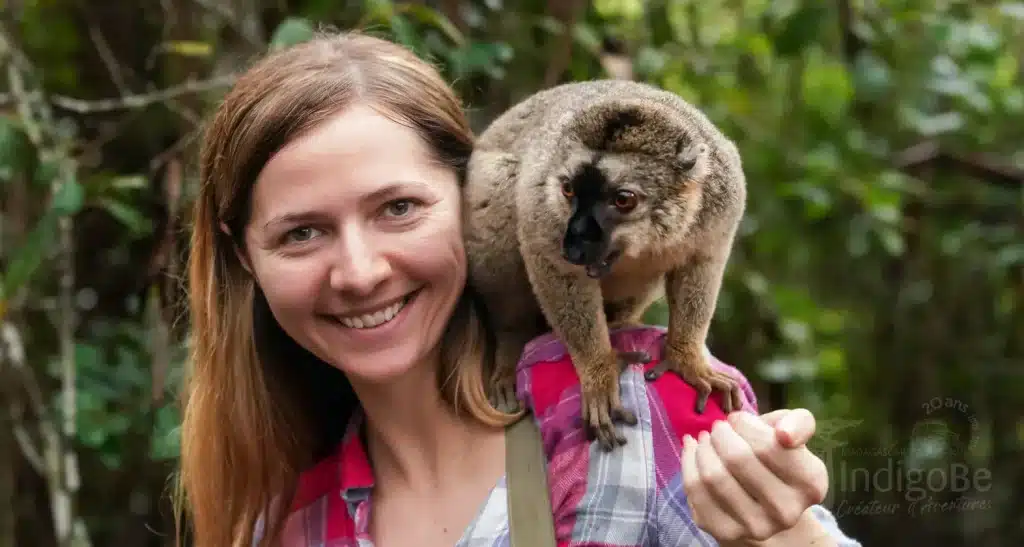
I KNOW, IT’S REALLY CUTE… BUT DON’T EVEN THINK ABOUT TOUCHING IT!
Avoid contact with animals
Even though they may seem harmless, avoid touching them, feeding them, doing anything near them (such as riding a bike or running), and even smiling at them. This will reduce the risk of being bitten.
Keep an eye on your children
Children are at greater risk of contracting rabies because they are more likely to touch animals. Keep a close eye on them at all times when animals are nearby.
Get vaccinated if it’s recommended
Pre-exposure vaccines may be recommended for some travelers.
IN THE EVENT OF A SCRATCH OR BITE,
ACT FAST!
Which animals transmit it?
All mammals can contract rabies.
In the event of a bite or scratch, wash the wound with soap and water for 15 minutes and seek medical attention IMMEDIATELY.
Among pets, the most common are dogs and cats.
In fact, 99% of cases are transmitted by dogs.
As for wild animals, the most common ones are: monkeys, raccoons, foxes, rodents, and bats.
Anyone can transmit rabies, even if they don’t appear to be sick.
IT’S A CRITICAL RACE AGAINST THE CLOCK—EVERY SECOND COUNTS!
UPDATED DATA ON HEALTH CARE IN MADAGASCAR (2024–2025)
Malaria – endemic throughout the country
Recent burden: In 2023, an estimated ≈2.8 million cases were reported in Madagascar (source: humanitarian/public health organizations operating on the ground). Malaria remains one of the leading causes of morbidity.
Regions and season: Heterogeneous transmission; most intense in the eastern and western coastal plains, with peaks in cases between February and May (many areas reach their peak in March–April). In the highlands, transmission is more erratic and prone to sporadic outbreaks.
Plague (bubonic and pneumonic) – endemic, monitored by IPM
Classic seasonality: The “favorable” season runs from September to April, with most cases occurring in the Central Highlands (>, 700–800 m).
The IPM is a long-standing authority on the plague and regularly publishes findings on its seasonal and geographic patterns in Madagascar.
Measles – Periodic Outbreaks
Following the major epidemic of 2018–2019, the country continues to report outbreaks in various districts. In 2024, the WHO/Africa weekly bulletins reported thousands of suspected cases by mid-year and ongoing transmission in several regions.
Rabies – endemic (primarily canine)
The IPM houses the Rabies Treatment Center (CTAR) and confirms that rabies remains endemic; it coordinates national diagnosis and provides post-exposure vaccination (no appointment necessary).
Schistosomiasis (bilharziasis) – very high prevalence in numerous districts
IPM provides information and is actively working to address schistosomiasis, a major public health problem caused by contact with infested freshwater.
Recent research data show prevalence rates >of 50% in specific areas (including co-infection with S. mansoni and S. haematobium), and >of 50% even among pregnant women in the Highlands.
Rift Valley Fever (RVF) – a zoonosis with documented outbreaks
It reemerged in 2021 with outbreaks in ≥5 regions; the IPM, the Ministry of Health, and collaborators published analyses in 2024 documenting its circulation in humans and animals, as well as entomological aspects of the outbreak. Risks are linked to rainfall, livestock, and mosquitoes.
Arboviral diseases (dengue, chikungunya, Zika) – risk and sporadic circulation
The IPM maintains a research program on arboviruses. In the Indian Ocean, dengue and chikungunya activity has been high (Comoros/Mayotte/Réunion), posing a risk to Madagascar (Aedes vectors present, limited surveillance).
Poliomyelitis (cVDPV1) – recent outbreak that has already been contained
Madagascar brought the outbreak of vaccine-derived poliovirus type 1 (cVDPV1) to an end in 2025, after an independent assessment confirmed that transmission had been interrupted; WHO/Africa officially announced this.
Typhoid fever – high incidence
Multicenter studies in sub-Saharan Africa (including Madagascar) place the country among those with an incidence of >100 per 100,000 per year; it is a major cause of febrile bacteremia and is associated with water and food.
Leptospirosis – Underdiagnosed but Present
Studies in Antananarivo document high rates of infection among rodents and point to underreporting of human cases due to diagnostic challenges; the risk is higher in urban flood-prone areas with poor sanitation.
Quick Tips for Travelers
Highest-risk season for malaria: in most of the country, February–May (peaking in March–April); on the east coast, the peak occurs earlier (~February). Use chemoprophylaxis and mosquito protection.
Plague: seasonal risk (Sep–Apr) in the Highlands; avoid contact with rodents and fleas, and seek urgent medical attention if you develop a fever along with respiratory symptoms or a bubo.
Rabies: Treat any bite or scratch from a mammal immediately; the IPM’s CTAR in Antananarivo provides walk-in care.
Water and Food: Typhoid and other waterborne diseases remain a concern; practice strict hygiene and opt for treated or bottled water.
Primary Sources
Pasteur Institute of Madagascar (IPM): plague (seasonality/areas), rabies/CTAR, arboviruses, schistosomiasis, 2024 publications on FVR.
https://www.afro.who.int/fr/countries/madagascar
WHO / African Region: Weekly bulletins and press releases 2024–2025 (measles; end of the cVDPV1 polio outbreak in 2025).
Recent additional evidence: malaria (seasonality/heterogeneity), schistosomiasis (high prevalence), 2021 FVR analyzed in 2024, typhoid burden.
International Vaccination Centers in Spain https://www.sanidad.gob.es/areas/sanidadExterior/laSaludTambienViaja/home.htm
Download the Catalog: Health Travels Too
Our Personal Experience
In the 20 years that we have been operating in Madagascar, we have had one case of malaria, one of typhoid fever, and one of brucellosis among our travelers upon their return to their home countries. All of these occurred within the last two years. Although these are few cases, we believe it is always important to consult our nearest Center for Tropical Medicine to receive the necessary, up-to-date information and take every precaution. It is each individual’s responsibility to take the necessary health precautions when traveling to Madagascar.