

Unfortunately, Madagascar’s forest area has been growing by leaps and bounds over the last 12 years. The use of charcoal as fuel in 80% of Malagasy households (almost 98% in rural areas) is causing rampant deforestation of the island, which has barely 30% of its forest area left.
The population cuts and burns all kinds of trees and bushes to provide charcoal. In addition, the primitive type of agriculture still practiced in the country, especially in the Highlands, also forces the forest to be cleared to plant its sacred rice paddies. The loss of forest areas in the country means less annual rainfall, which hinders the development of agriculture and causes water shortages.
But let’s face it, the government does not offer alternatives either. The price of a cylinder of butane gas is close to 17 Euros, and in a country where almost 70% of its inhabitants subsist on little more than 1 Euro a day, for many, it is an impossible task to procure another type of fuel for cooking or heating in winter. Even in many middle class homes in the capital, butane gas coexists with the traditional “fatapera” (charcoal stove), as belief and ignorance force people to cook certain foods with the traditional fuel.
If we add to all this the depredation of hardwood forests (rosewood, ebony, rosewood…) carried out since the 2009 coup d’état, the situation could not be more desperate.
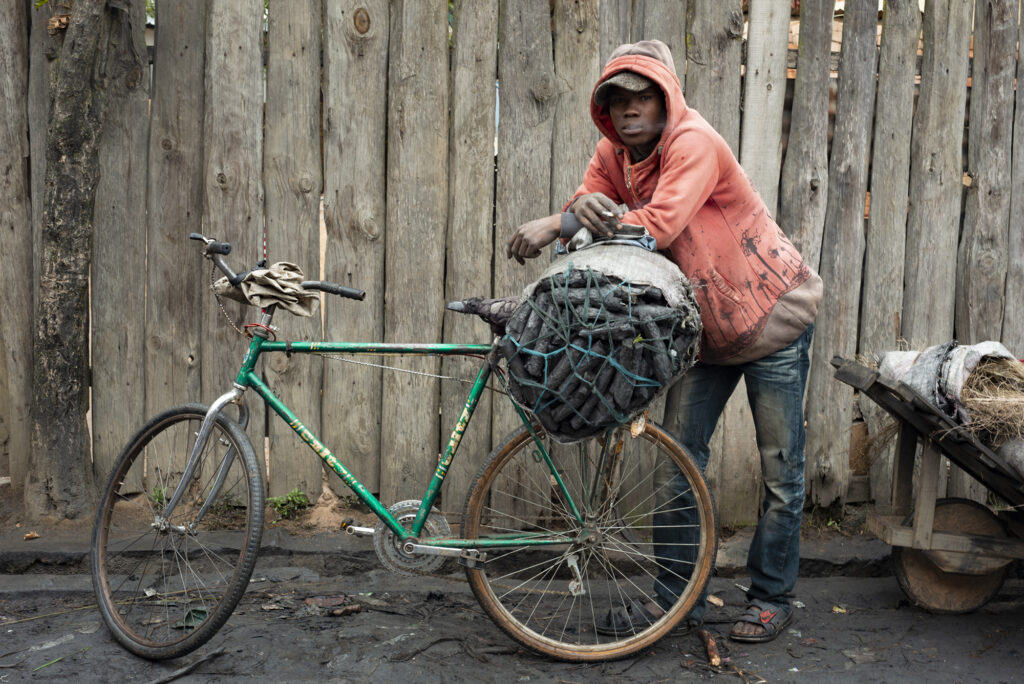
The picture shows a charcoal hauler in the Malagasy Highlands, where population pressure has virtually wiped out the ancient rainforests.
©IndigoBe / @sergireboredo
The solutions involve alternative measures that do not involve a large outlay for the population (state subsidies for certain alternative energies) and a lot of pedagogy. But for that there must be an economic investment, a technical accompaniment and large doses of will on the part of the authorities, for the moment much more concerned in other matters than in protecting the natural heritage and the environment of the island.